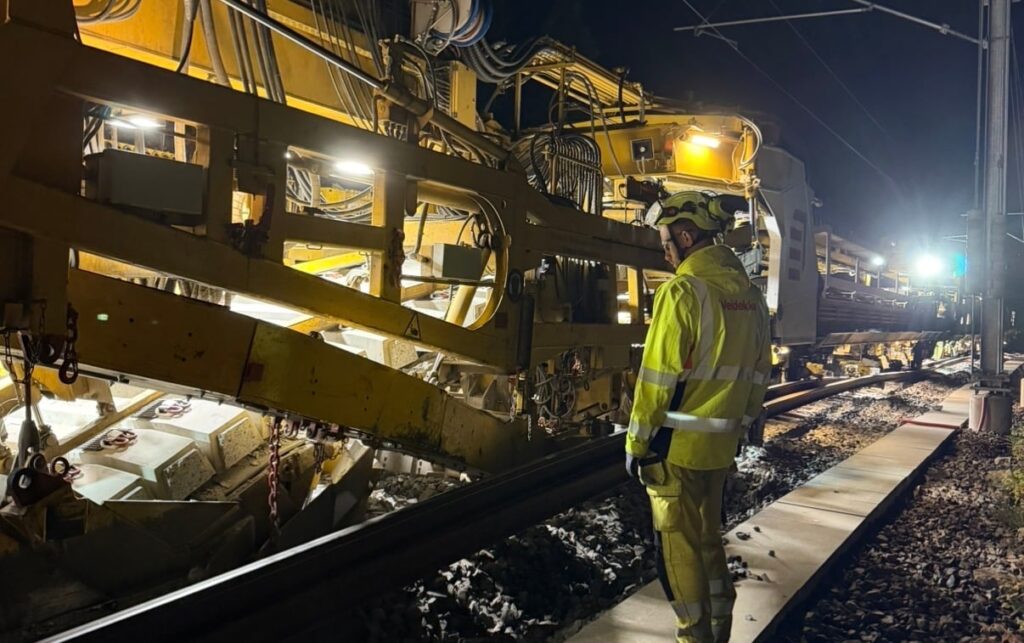
The Gjøvik Line was to open after amajor maintenance work Saturday, September 12th , but under testingthe signaling system showed trains on the track that were not there . Then we have to close the train service until we have found the fault and fixed it. It has not been an easy task this time.
–We have been working 24 hours a day since Saturday morning. People have been working day and night out on the track and in the office to analyze measurements, test hypotheses and implement improvements. It has been an impressive team effort across all disciplines, and that effort has now yielded results, says acting regional director Lars Rugtvedt.
Good results of intensive error correction
The work has been carried out in parallel on several fronts. Through extensive measurements and targeted measures, the professional communities have gradually narrowed down possible sources of error. Extensive checks and improvements have been carried out on the route. In several places, components in the track and signaling system have been checked, repaired or replaced, thousands of components.
– On Wednesday, we see that the measures and replacement of components are working and provide more accurate measurements. At the same time, we continue to work to find the underlying cause, so that we are sure that the error has been corrected. The goal is not only to get traffic going again, but to be confident that the system is working properly. There is still a lot of work and testing left before the section can be opened, says Rugtvedt.
Safety always comes first
Before the track can be opened to normal traffic, the infrastructure must meet all technical requirements.
– We see good results from the work that has been done, but we will not open until we are confident that the facility is functioning properly. Safety always comes first. When rails are lifted off for inspection and troubleshooting, it is also not possible to let traffic through while the work is in progress, says Rugtvedt.
Work will be carried out following the opening of the Gjøvik Line, but it will not affect traffic flow.
All hands to the pumps
The bug fix has brought together personnel from large parts of the organization and contractors.
– This is a work that has mobilized people from most of the operating bases in the area. Some have traveled several hours to contribute. Everyone is heading in the same direction with one goal in mind: to get train traffic back up and running as quickly as possible, without compromising safety. I am incredibly impressed with the effort that has been put in, says Rugtvedt.
The work is still ongoing around the clock, but within the current working hours regulations and with safe execution as the highest priority.
Traffic has been maintained where possible.
Although passenger traffic between Oslo S and Hakadal has been affected, train traffic on parts of the route has been maintained.
Vy has operated buses for trains on parts of the route, while freight traffic to Bergen has been run via Drammen during the period to ensure the performance of important transports.
What is a ghost train?
The reason for the closure is that the signalling system detects that a train is on the track, even though the track is actually empty. In railway parlance, this is called occupancy or “ghost train”. When the signalling system detects that the track is occupied, trains cannot run until the cause is found and corrected. This is an important safety feature that is intended to prevent trains from being cleared to enter a track that may be occupied.
Published:
Source: Bane NOR